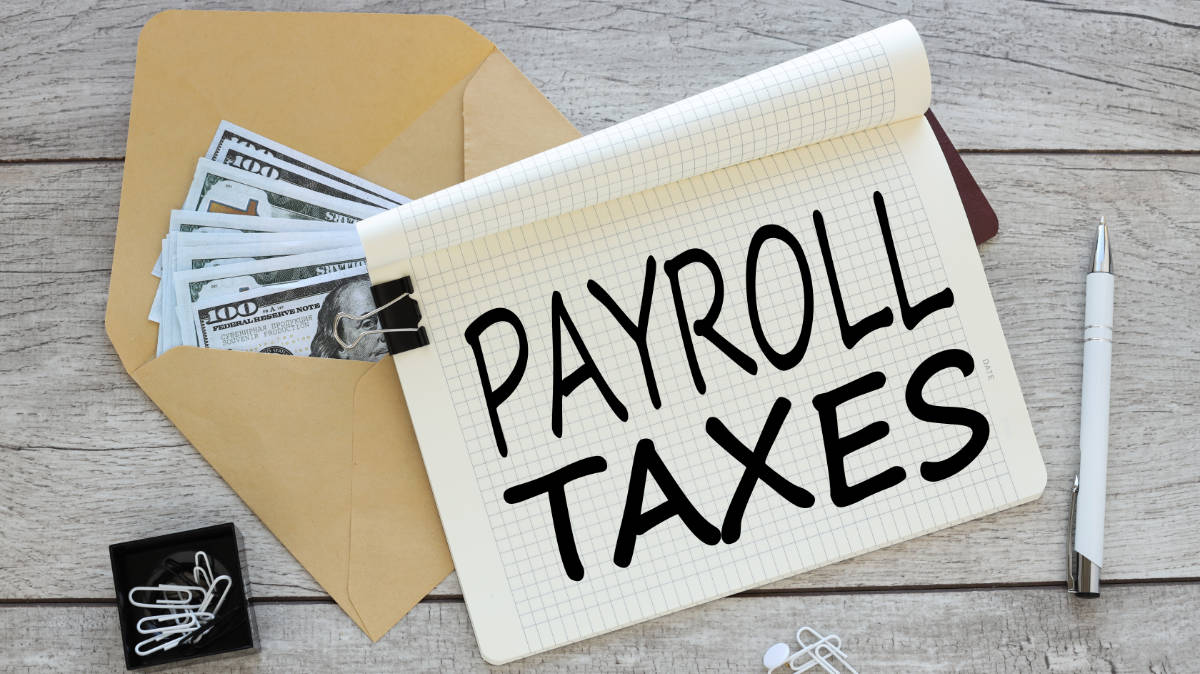
Payroll taxes are mandatory employer and employee contributions, typically a fixed percentage of wages used to fund government programs such as Social Security, Medicare, and unemployment insurance, and are regulated by federal agencies like the IRS and the Social Security Administration.
As a small business owner, you’re juggling countless responsibilities from managing operations to keeping customers happy. But there’s one area that can’t be overlooked: payroll taxes. Are payroll taxes affecting your cash flow more than you anticipated?
Understanding these mandatory contributions is crucial for maintaining compliance, avoiding costly penalties, and keeping your business financially healthy. For Tampa business owners, local payroll tax requirements can add another layer of complexity to federal obligations.
Percentage Breakdown of Total Payroll Tax Burden: For most small businesses, the combined employer and employee FICA tax rate is 15.3% of wages (12.4% for Social Security and 2.9% for Medicare). Employers pay 7.65% and employees pay 7.65%. In addition, employers pay federal unemployment tax (FUTA) at 6.0% on the first $7,000 of wages (with possible credits for state unemployment taxes), and state unemployment tax rates vary.
This means payroll taxes can account for over 10% of total payroll expenses for many businesses, not including additional state-specific requirements. Note: These rates and projections are based on currently available information for 2026 and may be subject to change as new legislation or IRS guidance is released.
To illustrate, if a small business in 2026 pays an employee $50,000 in annual wages, the employer would pay $3,825 in FICA taxes (7.65% of $50,000), consisting of $3,100 for Social Security (6.2% of $50,000) and $725 for Medicare (1.45% of $50,000).
The employee would also have $3,825 withheld for their share. Additionally, the employer would owe $420 in FUTA taxes (6.0% of the first $7,000 in wages, or $420), though this amount could be reduced by state unemployment tax credits. If the business is subject to a state unemployment tax rate of 2.7% on the first $7,000, that would be an additional $189 per employee. These numbers highlight how quickly payroll tax obligations add up for each employee on the payroll.
Payroll taxes represent one of the most significant ongoing expenses for small businesses, yet many owners underestimate their impact on daily operations. From FICA contributions to unemployment taxes, these obligations affect everything from hiring decisions to cash flow management.
The complexity increases when you consider that employers must not only withhold taxes from employee paychecks but also contribute matching amounts for certain programs, as required by the IRS and reported to the Social Security Administration.
| Tax Type | Employer Rate | Employee Rate | Wage Base Limit | Notes |
|---|---|---|---|---|
| Social Security (FICA) | 6.2% | 6.2% | $160,200 | Employer matches employee contribution |
| Medicare (FICA) | 1.45% | 1.45% | No limit | Additional 0.9% for employees earning over $200,000 (not matched by employer) |
| FUTA (Federal Unemployment) | 6.0% | N/A | $7,000 | Credit up to 5.4% for state unemployment taxes paid |
| State Unemployment (SUI) | Varies by state | N/A | Varies by state | Check your state’s rates and limits |
Key Takeaways
- Payroll taxes are a significant cost for small businesses – covering Social Security, Medicare, unemployment taxes, and more; understanding them is crucial for accurate budgeting.
- Small business owners are responsible for withholding employee taxes and matching employer contributions – proper payroll systems are essential to avoid compliance issues.
- Failing to pay payroll taxes or filing incorrectly can lead to penalties, audits, and cash flow challenges – staying organized and up-to-date is key.
- Tax credits and deductions, such as the Small Business Tax Credit, can help offset payroll tax expenses – ensure you’re taking full advantage of these opportunities.
- Regularly review upcoming changes to payroll tax laws – like those expected in 2026, to stay compliant and minimize financial strain on your business.
What Are Payroll Taxes for Small Businesses?
Payroll taxes for small businesses are mandatory contributions that fund various government programs and social safety nets. These taxes are collected from both employers and employees, with employers responsible for withholding, calculating, and remitting payments to the appropriate agencies such as the IRS and Social Security Administration.
Unlike income taxes, which vary based on individual circumstances, payroll taxes apply to nearly all employees and follow standardized rates.
The primary purpose of payroll taxes is to fund Social Security, Medicare, unemployment benefits, and other social insurance programs. For small businesses, these taxes represent a substantial ongoing expense that must be factored into labor costs and pricing strategies. Understanding the different components helps business owners budget accurately and maintain compliance.
Understanding FICA Taxes for Employers
FICA (Federal Insurance Contributions Act) taxes consist of two main components: Social Security and Medicare taxes. The Social Security tax rate for 2026 remains at 6.2% for both employers and employees, applied to wages up to the annual wage base limit. Medicare taxes are set at 1.45% each for employers and employees, with no wage cap.
Employers must match the exact amount withheld from employee paychecks for both Social Security and Medicare. This means for every dollar an employee contributes to FICA, the employer contributes an additional dollar. High-earning employees may also be subject to an additional Medicare tax of 0.9%, though employers don’t match this additional amount.
For example, if an employee earns $100,000 in 2026, the employer would withhold $6,200 for Social Security (6.2% of $100,000) and $1,450 for Medicare (1.45% of $100,000) from the employee’s pay, and the employer would also pay the same amounts. The total FICA tax for this employee would be $15,300 ($7,650 from the employer and $7,650 from the employee).
Federal vs. State Payroll Taxes
Federal payroll taxes include FICA taxes and Federal Unemployment Tax Act (FUTA) contributions. FUTA taxes are paid entirely by employers at a rate of 6.0% on the first $7,000 of each employee’s wages, though employers can claim credits for state unemployment taxes paid.
For instance, if you have three employees and each earns at least $7,000, your FUTA liability before credits would be $420 per employee, or $1,260 total.
If you qualify for the maximum state tax credit of 5.4%, your net FUTA rate drops to 0.6%, reducing the liability to $42 per employee, or $126 total for three employees.
State payroll taxes vary significantly by location and may include state unemployment insurance (SUI), state disability insurance, and worker’s compensation contributions. Some states have no additional payroll taxes beyond unemployment insurance, while others may have multiple programs. Understanding state-specific tax obligations is essential for compliance, especially for businesses operating in multiple states.
Employer Payroll Tax Obligations in 2026
Small business owners carry significant responsibilities when it comes to payroll tax compliance. Beyond calculating and withholding the correct amounts, employers must ensure timely deposits, accurate reporting, and proper documentation. These obligations begin the moment you hire your first employee and continue throughout the employment relationship.
The complexity of employer payroll tax obligations increases with business size and the number of states where you have employees. Remote work arrangements have added another layer of complexity, as employers may need to comply with tax requirements in multiple jurisdictions. Staying current with changing regulations and rates is essential for avoiding compliance issues.
Payroll Tax Compliance Checklist for Small Businesses
- Register for federal and state employer tax accounts before hiring employees
- Collect and maintain accurate employee tax forms (W-4, I-9, state equivalents)
- Calculate and withhold correct payroll taxes each pay period
- Deposit payroll taxes on time according to your assigned IRS schedule
- File quarterly (Form 941) and annual (W-2, W-3) payroll tax returns accurately
- Keep detailed payroll records, including pay stubs and deposit confirmations
- Monitor for changes in tax rates, wage limits, and filing requirements
- Review eligibility for payroll tax credits and deductions
- Consider using payroll software or a professional payroll service
- Respond promptly to IRS or state agency notices regarding payroll taxes
Withholding and Remitting Taxes
The withholding process begins with each payroll cycle, where employers calculate and deduct the appropriate taxes from employee wages. This includes federal income tax withholding based on Form W-4 information, FICA taxes, and any applicable state and local taxes. Accuracy in these calculations is crucial, as errors can lead to penalties and employee dissatisfaction.
Tax deposits must be made according to specific schedules determined by the size of your tax liability. Most small businesses follow either a monthly or semi-weekly deposit schedule. Monthly depositors must remit taxes by the 15th of the following month, while semi-weekly depositors have shorter deadlines based on when payroll was processed. Missing these deadlines can result in significant penalties.
Payroll Tax Forms and Documentation
Proper documentation is the foundation of payroll tax compliance. Form 941, the quarterly federal tax return, reports wages paid and taxes withheld for each quarter. This form must be filed even if no taxes are owed, and accuracy is critical as it’s cross-referenced with deposit records and annual forms.
Year-end reporting includes preparing W-2 forms for employees and Form W-3 for the Social Security Administration. State requirements may include additional forms and deadlines. Maintaining detailed payroll records, including time sheets, pay stubs, and tax deposit confirmations, supports these filings and provides protection during audits.

Smart financial decisions start with the right conversation. Let’s figure out what works best for your business.
How Payroll Taxes Affect Small Business Cash Flow
Payroll taxes create a substantial impact on small business cash flow, often representing one of the largest recurring expenses after wages themselves. The employer portion of FICA taxes alone adds over 7.6% to your labor costs, not including unemployment taxes, worker’s compensation, and other contributions. This additional expense must be carefully planned for in budgeting and pricing decisions.
For example, if your business has a monthly payroll of $20,000, you would owe $1,530 in employer FICA taxes each month (7.65% of $20,000), plus any applicable unemployment taxes. Over a year, that’s $18,360 in employer FICA taxes alone, not including the employee’s share or other payroll-related costs.
The timing of payroll tax obligations can create cash flow challenges, especially for seasonal businesses or those with irregular revenue patterns. Taxes must be deposited according to federal schedules regardless of when customer payments are received. This disconnect between revenue timing and tax obligations requires careful cash flow management and potentially maintaining reserves for tax payments.
Strategies to Manage Payroll Tax Costs
Implementing efficient payroll processes can help minimize the administrative burden and reduce errors that lead to penalties. Professional payroll services can streamline calculations, ensure timely deposits, and handle complex compliance requirements. While these services have costs, they often provide savings through error reduction and time savings.
Technology solutions, including payroll software and integrated accounting systems, can automate many payroll tax functions. These tools can calculate taxes, generate required forms, and provide reminders for filing deadlines. Integration with time tracking and accounting systems further reduces manual data entry and potential errors.
Avoiding Payroll Tax Penalties
Payroll tax penalties can be severe and accumulate quickly. Common mistakes include late deposits, incorrect calculations, and missing filing deadlines. The IRS imposes penalties for both late payments and late filings, with rates that can reach 15% for severely delinquent deposits. Interest charges compound these penalties over time.
Prevention strategies include establishing systematic processes for payroll tax compliance, using reliable software or services, and maintaining adequate cash reserves for tax payments. Regular reviews of payroll processes and staying informed about changing requirements help identify potential issues before they become costly problems.
Payroll Tax Compliance Tips for Startups
Payroll tax compliance for startups begins with understanding your obligations from day one. Many new business owners underestimate the complexity of payroll taxes and may delay setting up proper systems. This approach can lead to compliance issues that are expensive and time-consuming to resolve. Establishing good practices early creates a foundation for sustainable growth.
Startups face unique challenges in payroll tax compliance, including limited resources, evolving business structures, and rapid growth. The key is building scalable systems that can accommodate growth while maintaining accuracy and compliance. Working with experienced professionals can help startups avoid common pitfalls and establish best practices from the beginning.
Setting Up Payroll Systems
Choosing the right payroll system is crucial for accurate tax calculations and compliance. Options range from basic software solutions to comprehensive payroll services that handle all aspects of payroll processing. Consider factors such as business size, complexity of pay structures, multi-state operations, and integration with existing accounting systems.
Cloud-based payroll solutions offer advantages for startups, including automatic updates for tax rates and regulations, accessibility from multiple locations, and scalability as the business grows. These systems typically include features for employee self-service, direct deposit, and automated tax filings, reducing administrative burden on business owners.
Understanding Payroll Tax Audits
Payroll tax audits can occur for various reasons, including discrepancies in filings, random selection, or employee complaints. During an audit, the IRS or state agencies will review payroll records, tax deposits, and compliance with worker classification rules. Proper documentation and accurate record-keeping are essential for successfully completing an audit.
Preparation for potential audits includes maintaining organized records, understanding worker classification requirements, and ensuring all filings are accurate and timely. If selected for an audit, respond promptly and professionally, providing requested documentation in an organized manner. Professional representation can be valuable during complex audits or when significant issues are identified.
Consequences of Payroll Tax Non-Compliance
The consequences of payroll tax non-compliance extend far beyond financial penalties. The IRS treats payroll taxes as “trust fund taxes” because employers hold these funds in trust for the government. This designation gives the IRS significant collection powers, including the ability to pursue personal assets of business owners and responsible parties.
Non-compliance can damage relationships with employees, who may face issues with Social Security credits or benefit eligibility if their taxes aren’t properly reported to the Social Security Administration. Additionally, compliance problems can affect business operations through liens, levies, and potential closure of business bank accounts. The reputational damage from tax problems can also impact customer relationships and business opportunities.
Common Payroll Tax Penalties
Failure-to-deposit penalties are among the most common and can be substantial. These penalties range from 2% for deposits made 1-5 days late to 15% for deposits made more than 10 days late. The penalty structure accelerates quickly, making even short delays expensive. Failure-to-file penalties for quarterly returns add another layer of potential costs.
Interest charges accrue on unpaid taxes and penalties from the original due date, compounding the financial impact of non-compliance. The IRS also imposes trust fund recovery penalties on individuals responsible for payroll tax compliance, making these obligations personal rather than just business debts. These penalties can’t be discharged in bankruptcy, making resolution critical.
Rebuilding Trust After Non-Compliance
Resolving payroll tax issues requires immediate action and often professional assistance. The first step is bringing all filings current and establishing a plan for ongoing compliance. Payment arrangements may be available for businesses that can’t immediately pay all outstanding obligations, but these require demonstrating ability to stay current with ongoing taxes.
Rebuilding credibility with employees may require transparent communication about steps taken to resolve issues and ensure future compliance. Implementing stronger systems and controls demonstrates commitment to proper payroll management. Regular monitoring and professional oversight can help maintain compliance and prevent future problems.
Frequently Asked Questions
What are the main payroll taxes small businesses must pay?
Small businesses must pay several types of payroll taxes, including FICA taxes for Social Security and Medicare, which require both employer and employee contributions. Federal and state unemployment taxes are paid entirely by employers, while some states may have additional requirements like disability insurance or worker’s compensation contributions. The specific taxes depend on your location and business structure.
How can small businesses avoid payroll tax penalties?
Avoiding penalties requires filing and paying taxes on time according to federal and state schedules. Using reliable payroll software can automate calculations and provide reminders for important deadlines. Consulting with tax professionals provides guidance on complex requirements and helps identify potential issues before they become problems. Regular reviews of payroll processes and maintaining adequate cash reserves for tax payments are also essential.
What happens if I miss a payroll tax deadline?
Missing payroll tax deadlines can result in significant penalties and interest charges that compound over time. The IRS may impose failure-to-file or failure-to-pay penalties, which can reach 15% for severely delinquent deposits. Beyond financial consequences, persistent non-compliance can lead to liens, levies, and potential criminal charges in extreme cases.
How do payroll taxes impact cash flow for small businesses?
Payroll taxes represent a substantial recurring expense that affects budgeting and cash flow planning. The employer portion of payroll taxes adds over 7.6% to labor costs through FICA contributions alone, not including unemployment taxes and other obligations. The timing of tax deposits may not align with revenue collection, requiring careful cash flow management and potentially maintaining reserves for tax payments.
Can payroll tax software help small businesses stay compliant?
Yes, payroll software can significantly improve compliance by automating tax calculations, generating required forms, and providing reminders for filing deadlines. Modern solutions include automatic updates for changing tax rates and regulations, reducing the risk of errors. Integration with accounting systems and time tracking tools further streamlines the process and reduces manual data entry that can lead to mistakes.